
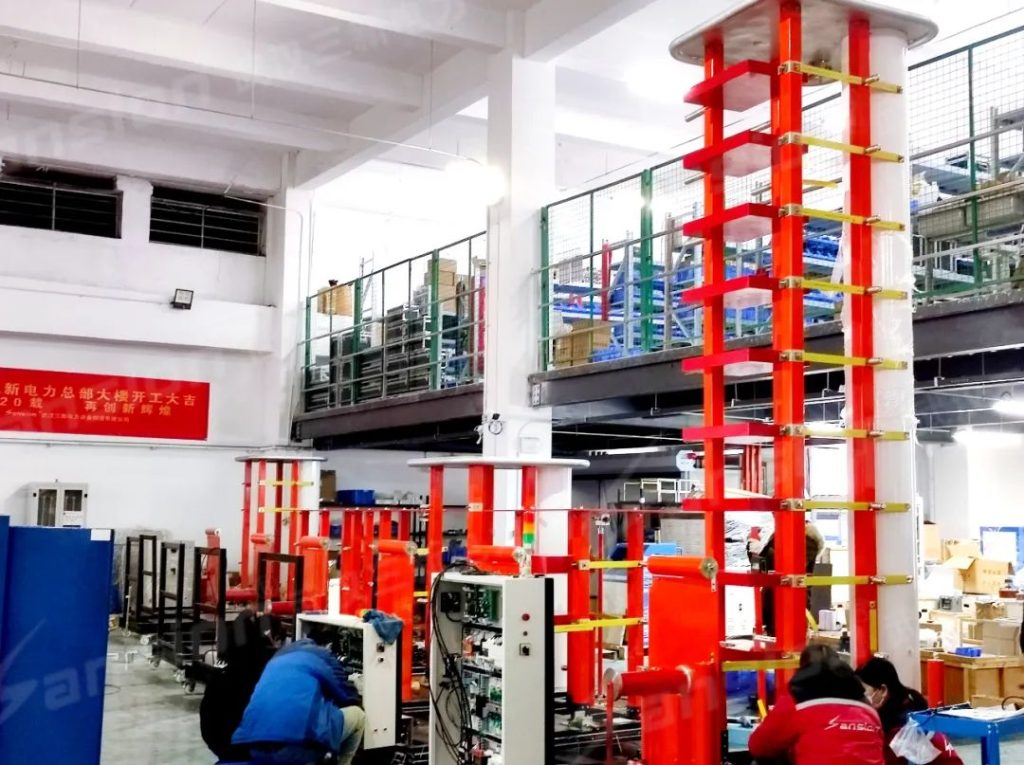
Introduction
In the electric power industry, ensuring the resilience and safety of electrical systems under extreme conditions is critical. High voltage impulse tests, guided by the International Electrotechnical Commission (IEC) standards, are fundamental in achieving this. My experience as an electrical testing expert has consistently underscored the importance of these tests in maintaining the reliability of power systems globally.
Understanding High Voltage Impulse Tests
The Essence of Impulse Testing
High voltage impulse tests simulate sudden, high-voltage surges, akin to lightning strikes or power system switching operations. These tests are essential for assessing electrical equipment’s capacity to withstand extreme voltage conditions without failure.
Importance in the Electric Power Industry
My career has been a testament to the fact that the robustness of power transmission and distribution heavily relies on the endurance of equipment against such surges. Impulse testing is a critical component of operational safety and system reliability.
The Role of IEC in Impulse Testing
IEC’s Contribution to Electrical Standards
The IEC’s role in standardizing high voltage impulse testing, particularly through IEC 60060, is invaluable. These standards provide a global framework, ensuring uniformity and accuracy in testing practices.
IEC Guidelines for Impulse Testing
Key Components of the Guidelines
IEC 60060 outlines precise requirements for impulse waveform parameters, such as front time (typically 1.2 microseconds) and time to half-value (usually 50 microseconds), and peak voltage. These specifications ensure the reliability and comparability of tests conducted worldwide.
Practical Implementation
Adhering strictly to IEC guidelines is crucial for accurate testing. I recall identifying a flaw in an insulator during a project, thanks to the precise test sequence mandated by the IEC. This incident highlights the real-world impact of following these guidelines diligently.
Equipment and Setup for IEC Compliance
Required Testing Equipment
Impulse voltage generators and measurement systems that align with IEC standards are critical for conducting these tests. Choosing compliant equipment is vital for obtaining accurate and reliable results.
Setting Up for the Test
A proper setup according to IEC standards involves considering environmental factors like humidity, which can affect measurements. This comprehensive approach is key to ensuring test accuracy.
Challenges and Solutions in Impulse Testing
Common Testing Challenges
Issues often arise from equipment calibration or result interpretation. Rigorous calibration, in line with IEC standards, is essential for mitigating these challenges.
Keeping Up with IEC Updates
Staying abreast of the latest IEC standard updates is crucial. Regular participation in industry seminars and reading IEC publications are effective ways to keep up-to-date.
Global Perspective and Compliance
IEC Standards in the International Arena
IEC standards are globally recognized and their adoption promotes a unified approach to electrical testing. This harmonization is vital for safety standards and facilitates international collaboration in the power industry.
Conclusion
Adherence to IEC guidelines for high voltage impulse tests is a commitment to safety, reliability, and excellence. As professionals, continuous education and compliance with these standards are imperative for maintaining industry integrity.